Microplastics in Sediment (Deep Lake)
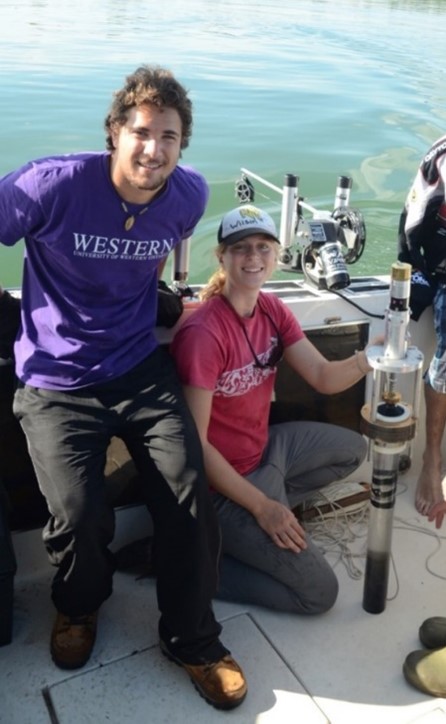
Sediment cores from deep lake bottoms are collected by Environment and Climate Change Canada
(ECCC) using a box corer deployed from a ship. Sediment core samples in shallower depths (<9
m) are collected using a glew gravity corer and fishing boat.
Photo: Anika and Trevor with the glew corer on Lake Ontario.
Microplastics in Sediment (River/Pond)
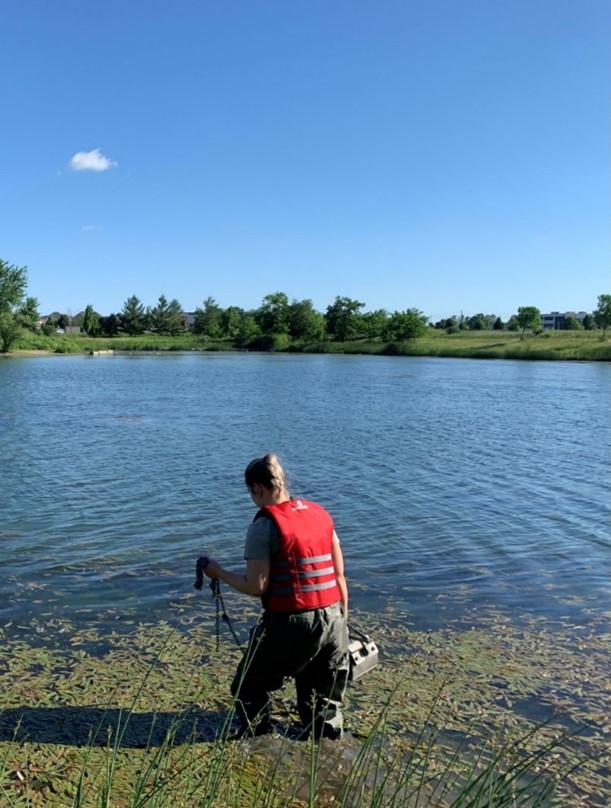
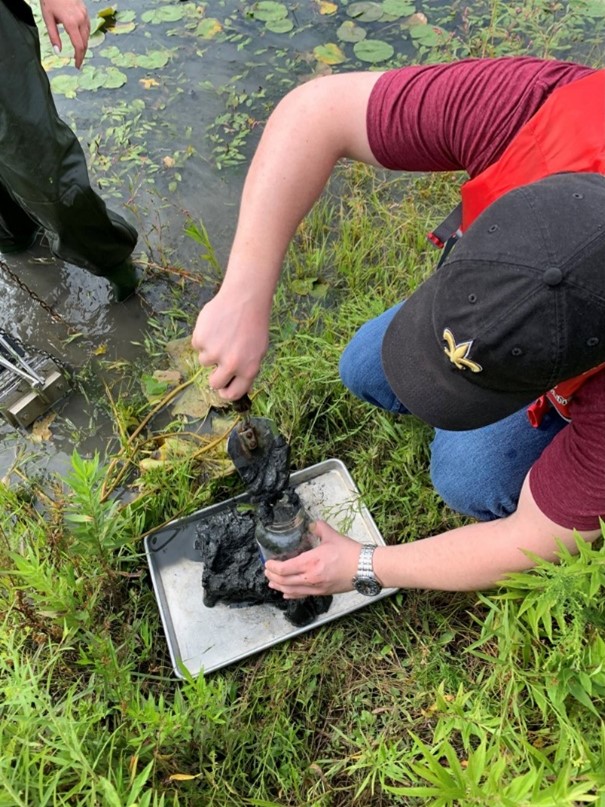
We collect sediment from river and pond bottoms using a petite ponar grab, metal trowel and pan,
and glass jars.
Photos: Natalie with the petite ponar in a stormwater pond; Chris filling a jar with sampled
sediment.
Micro- and Macroplastics along Shorelines
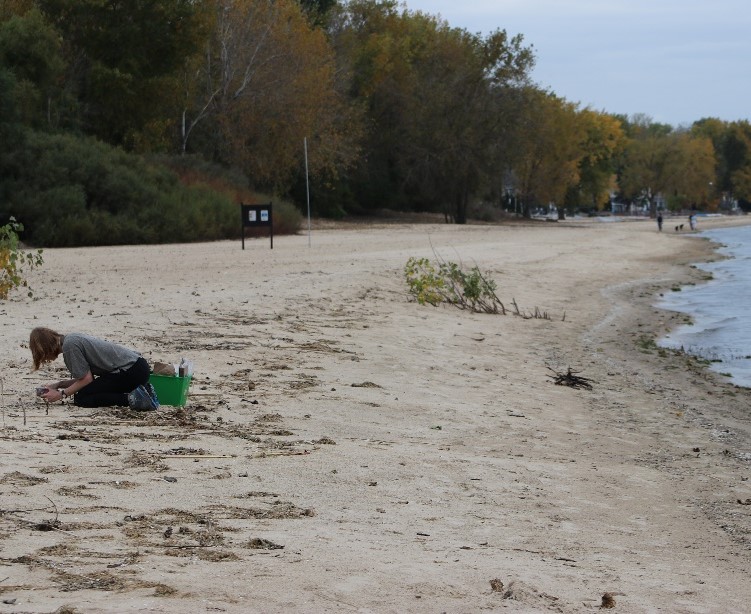
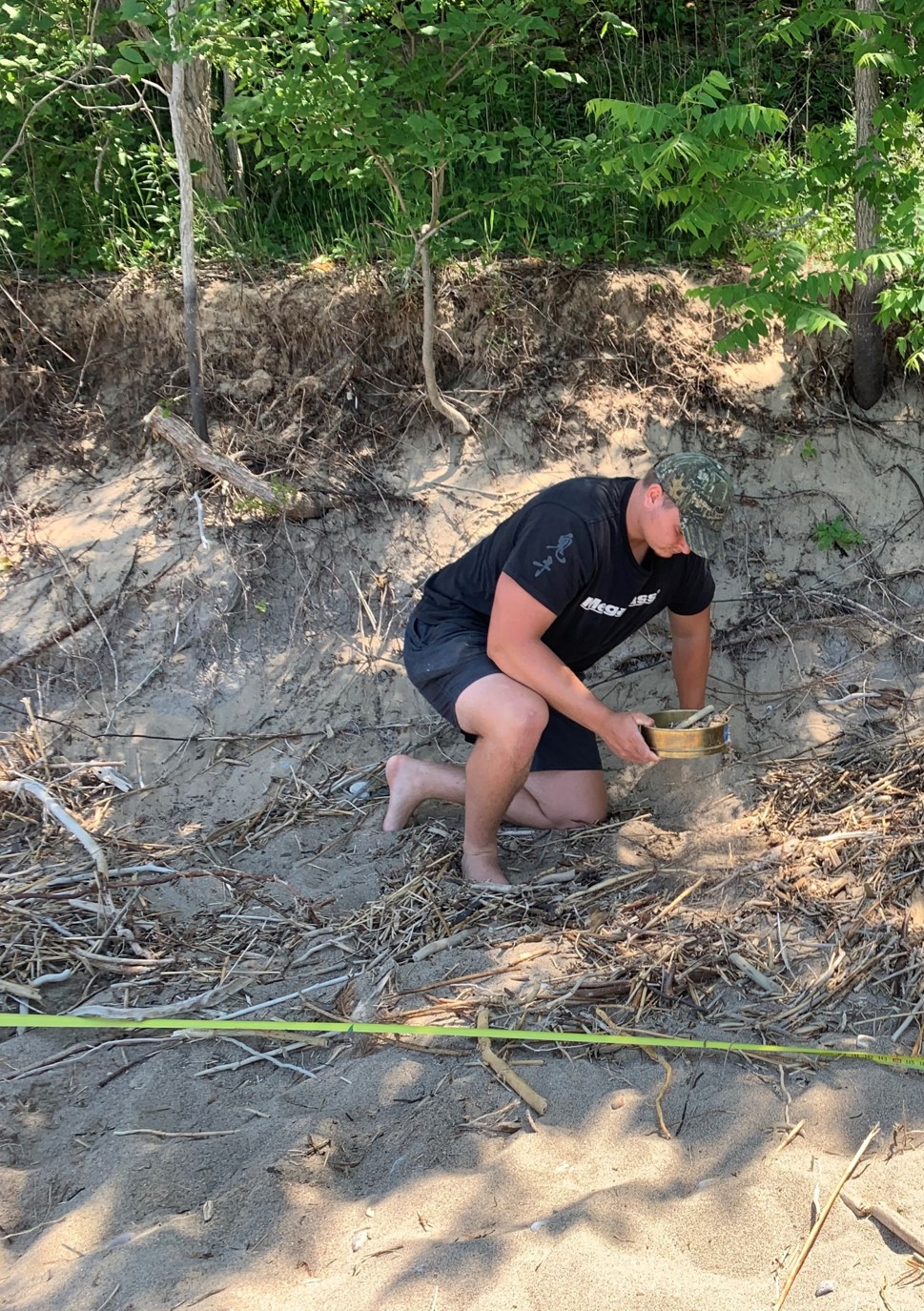
We search for plastic debris along shorelines using sieves and our hands and place the particles
in paper bags.
Photos: Kelly surveying for pellets on a Lake Ontario beach; Owen sieving for plastics on a
Lake Huron beach.
Microplastics in Biota
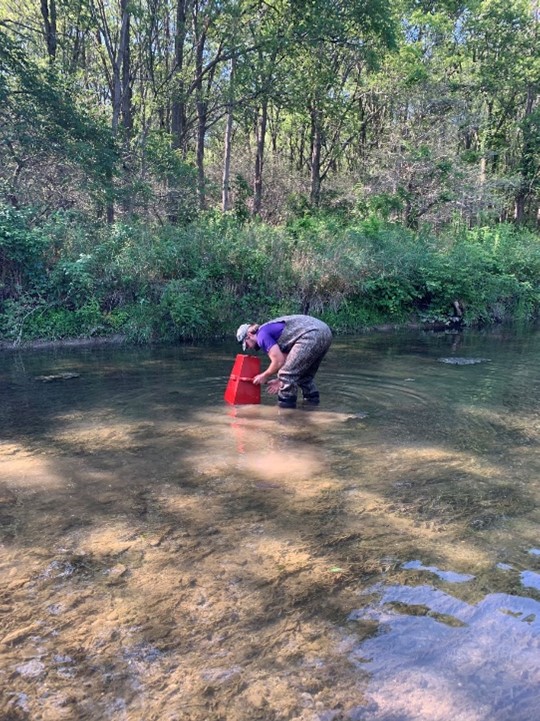
Mussels are identified using a viewer on the surface of the water. Fish are caught by local
northern communities and their stomachs are sent to us for processing.
Photo: Alex using a viewer to find mussels in the Thames River, Canada.